Five Kingdom Classification Flow Chart
×
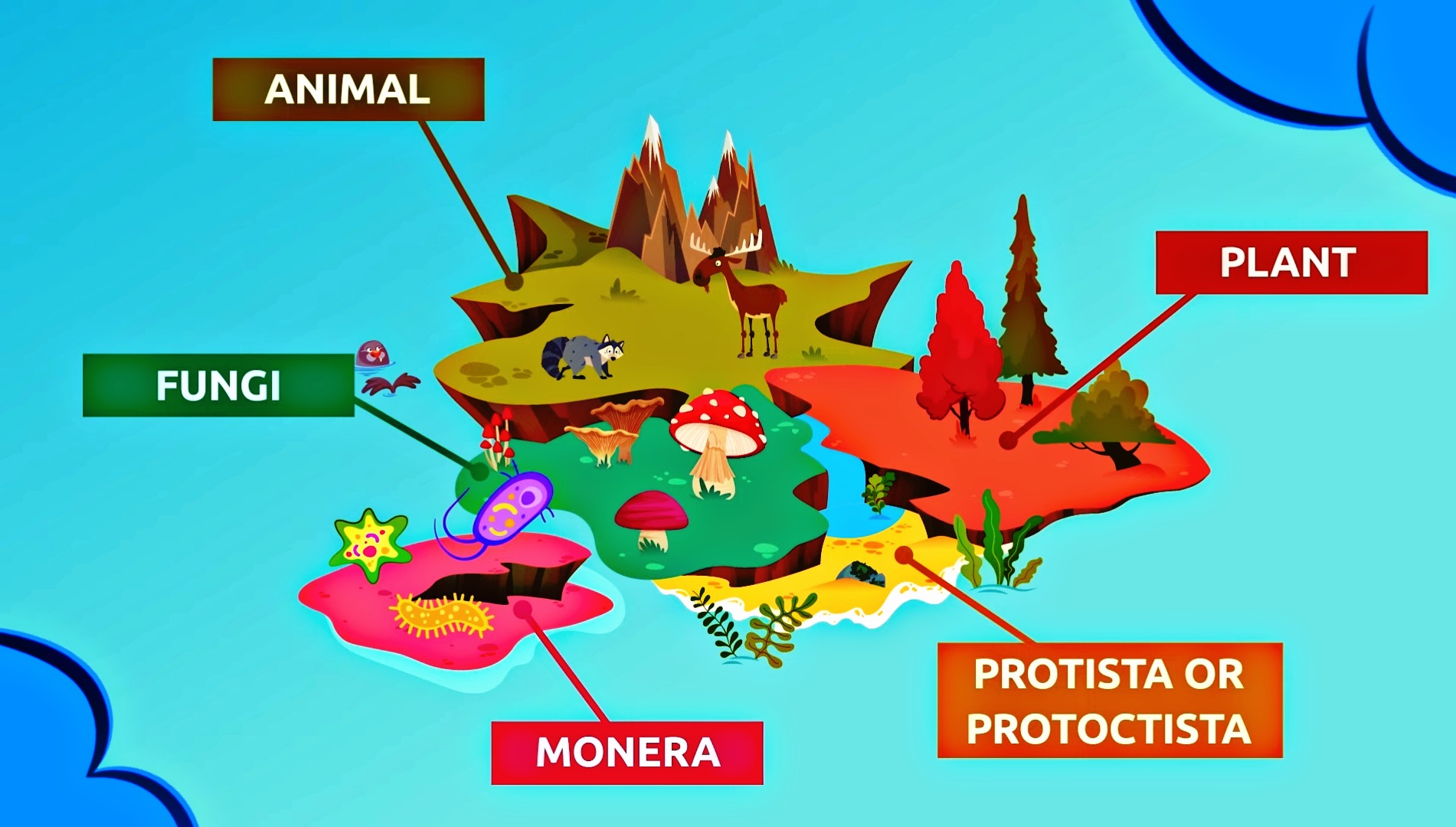
★ Animalia, also known as the animal kingdom, is a diverse group of organisms that includes mammals, birds, reptiles, amphibians, fish, and invertebrates.
★ They exhibit a wide range of adaptations, from the ability to fly and swim to complex social behaviors and intricate physiological systems. Animalia is characterized by the presence of specialized tissues and organ systems, allowing for more advanced development and functionality. Animals are multicellular, eukaryotic organisms that obtain energy through consuming organic matter or other organisms.
★ This kingdom plays a crucial role in ecosystems, contributing to biodiversity, ecological balance, and providing essential services such as pollination, seed dispersal, and nutrient recycling. Animals within the kingdom Animalia have evolved a remarkable diversity of body plans, sizes, and habitats, ranging from microscopic organisms to giants like the blue whale, showcasing the incredible adaptability and evolutionary success of this group.
★ The Fungi kingdom is a diverse group of eukaryotic organisms that includes mushrooms, molds, yeasts, and other fungal species.
★ The fungal kingdom exhibits an incredible diversity of forms, from microscopic single-celled yeasts to elaborate, fruiting bodies like mushrooms, showcasing their adaptation to various habitats and environmental conditions. Fungi are characterized by their unique mode of nutrition, as they obtain nutrients by absorbing organic matter from their environment rather than photosynthesis. They play crucial roles in ecosystems as decomposers, breaking down dead organic material and recycling nutrients back into the environment.
★ Fungi are also important symbiotic partners, forming mutualistic relationships with plants (mycorrhizae) or algae (lichens) to facilitate nutrient exchange and enhance ecosystem resilience. Some fungi are pathogenic, causing diseases in plants, animals, and humans, while others have beneficial uses such as producing antibiotics (e.g., penicillin) or being used in food production (e.g., yeast in bread and beer).
★ The Monera kingdom, also known as the prokaryotes, consists of single-celled organisms that lack a nucleus and other membrane-bound organelles.
★ Monera is divided into two main groups: bacteria and archaea. Bacteria are widely distributed and can be found in various habitats, while archaea often inhabit extreme environments such as hot springs or deep-sea hydrothermal vents. These organisms are crucial to Earth's ecosystems as they play roles in nutrient cycling, decomposition, and symbiotic relationships with other organisms. Monera exhibit diverse metabolic capabilities, including photosynthesis, chemosynthesis, and various modes of acquiring energy and nutrients.
★ They are characterized by their ability to reproduce asexually through binary fission, allowing for rapid population growth and adaptation to changing environmental conditions. Some bacteria have beneficial roles, such as nitrogen fixation in soil, while others can be harmful pathogens causing diseases in plants, animals, and humans.
★ Plant cells have cell walls made of cellulose, which provides structural support and protection.
★ Plants are essential for sustaining life on Earth as they produce oxygen, provide food, and serve as habitats for countless organisms. They exhibit a wide range of forms, from tiny mosses and ferns to towering trees, showcasing their adaptability to different environments and ecological niches. The Plantae kingdom consists of multicellular, eukaryotic organisms that are primarily photosynthetic, utilizing chlorophyll and other pigments to capture sunlight and convert it into energy.
★ Plant reproduction involves alternation of generations, with a diploid sporophyte phase and a haploid gametophyte phase, allowing for genetic variation and adaptation. Plants have evolved a variety of specialized structures and adaptations, such as roots for anchoring and nutrient absorption, leaves for photosynthesis, and flowers for sexual reproduction and pollination.
★ Protists exhibit a wide range of forms and lifestyles, including single-celled organisms, colonial forms, and multicellular organisms.
★ The Protista kingdom, also known as the protists, is a diverse group of eukaryotic microorganisms that do not fit into the categories of plants, animals, or fungi. They can be found in various aquatic habitats, including freshwater, marine environments, and even moist soil. Protists display a variety of nutritional strategies, including photosynthesis, heterotrophy (consuming organic matter), and mixotrophy (combining both strategies).
★ Some protists are capable of movement using flagella, cilia, or pseudopodia, allowing them to navigate through their environments. Protists play important ecological roles as primary producers, consumers, and decomposers, contributing to nutrient cycling and the overall functioning of ecosystems.