| State | Substance | Speed in m/s |
|---|---|---|
| Solid | Aluminium | 6420 |
| Nickel | 6040 | |
| Steel | 5960 | |
| Iron | 5950 | |
| Brass | 4700 | |
| Glass | 3980 | |
| Liquid | Water(sea) | 1531 |
| Water(distilled) | 1498 | |
| Ethanol | 1207 | |
| Methanol | 1103 | |
| Gases | Hydrogen | 1284 |
| Helium | 965 | |
| Air | 346 | |
| Oxygen | 316 | |
| Sulphur dioxide | 213 |
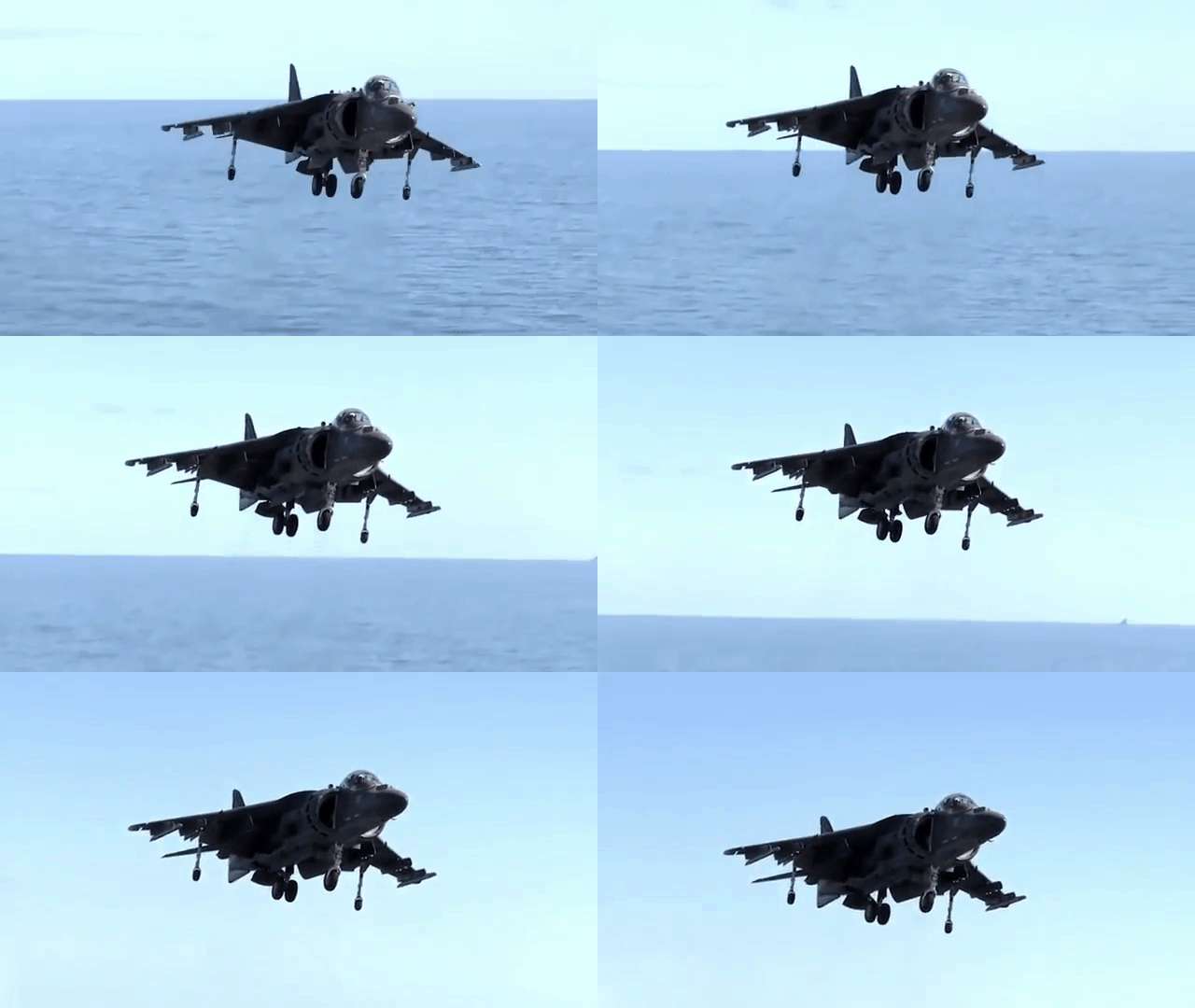
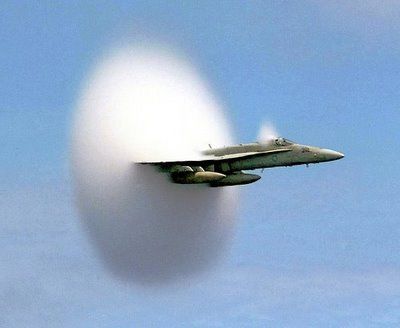
When the speed of any object the speed of respective object is known as supersonic speed. For example, the speed of bullets, jet aircrafts, etc.When a sound producing source itself moves with a speed higher than that of the sound, it produces the shock waves in air.The shock waves carry a large amount of energy, which causes air pressure variation in its immediate environment. The shock waves produce a very sharp and loud sound, which is known as sonic boom.
Bouncing back of sound waves from the surface is called reflection of sound or we can say that when sound travels in a given medium it strikes the surface of another medium so that it returns in some other direction, this phenomenon is called reflection of sound.
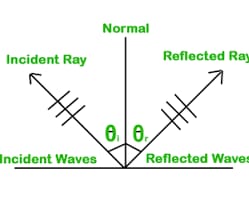
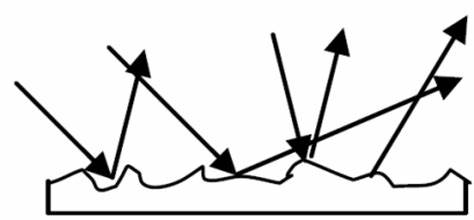
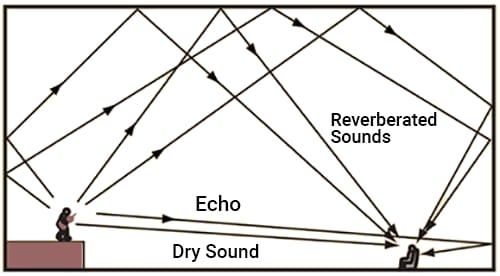
If we shout or clap near a suitable reflecting object such as a tall building or a mountain, we will hear the same sound again a little later.This sound which we hear is called an Echo.
The sensation of sound continues in our brain for about 0.1 s; therefore, to hear a distinct echo sound, the time interval between the original sound and the reflected sound must be at least 0.1s.
To hear the distinct echo sound, the minimum distance of the obstacle from the source of sound must be 17.2 m. However, this distance is variable, as depends on temperature.
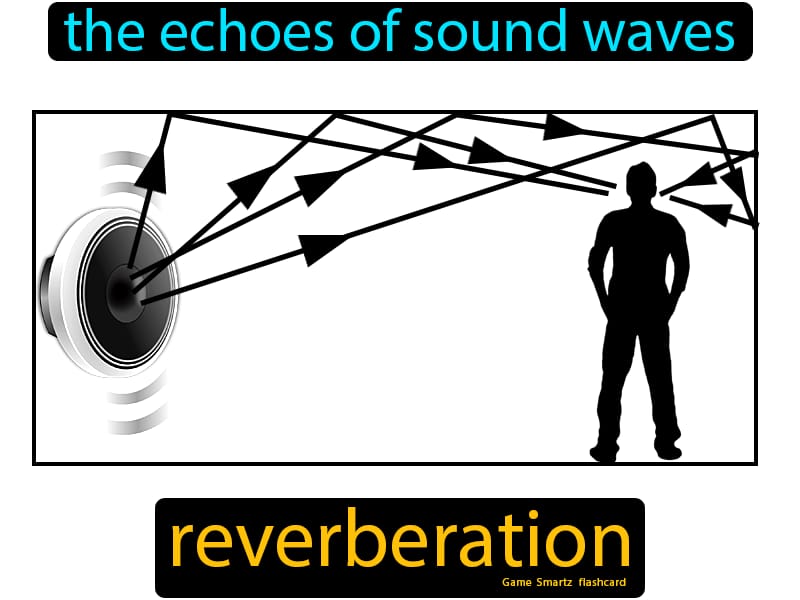
The repeated reflection that results in the persistence of sound waves is known as reverberation.For an example auditorium or big hall excessive reverberation is highly undesirable.
To reduce reverberation, the roof and walls of the auditorium are generally covered with sound-absorbent materials like compressedfibreboard, rough plaster or draperies.