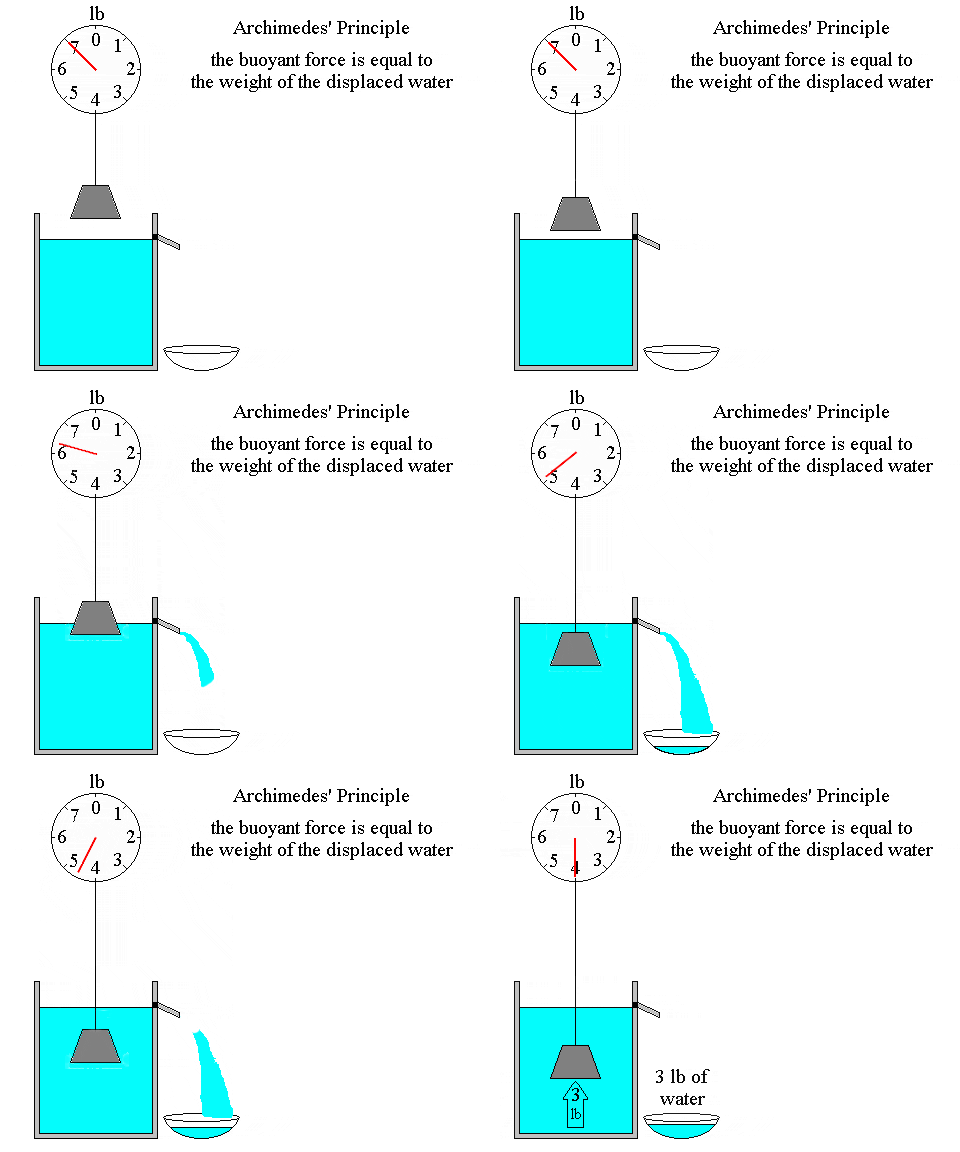
Thrust And Pressure states that:
“Thrust is a kind of force acting on an object. An object can experience force from many directions. The force which acts on an object perpendicular to its surface is called thrust, and the effect of thrust per unit area on an object is called pressure. When an object is kept on a surface, it will exert a force on it. The effect of force on that surface depends on the area of contact with the surface. The more the area, the smaller the effect of the force (less pressure), and the smaller the area, the greater the effect of the force (more pressure).”
Thrust and Pressure are the types of forces that can be applied on a particular object. The key difference between the two is the direction of force applied. A force can be exerted in any direction to a surface. Thrust is the force applied to a surface in a direction that is normal or perpendicular to the surface, whereas pressure is the thrust or force applied to a unit area of surface. Thrust and pressure are both affected by the earth's gravity and gravitational pull. On the surface, the two terms appear to be the same and are often used interchangeably. However, if we look closely, we can see how unlike them they are. The majority of you have probably noticed that small vehicles, such as cars, have small and thin tyres, whilst larger vehicles, such as buses and trucks, have thick tyres. The thicker the tires, the heavier the vehicle. Thrust and pressure can now be used to explain this scenario

*We also know the thrust force as the buoyant force as it is responsible
for objects to float.
Thus, this equation is the law of buoyancy.